8 Best Prebiotic Fiber Powders of 2026
This post contains affiliate links. As an Amazon Associate, we earn from qualifying purchases.
Many people struggle to get enough fiber in their diet, leading to digestive issues, imbalanced gut bacteria, and reduced overall wellness—especially when whole food sources fall short. The best prebiotic fiber powders address this gap by delivering targeted, easily digestible fibers like inulin, acacia, and FOS that fuel beneficial gut microbes and support long-term digestive health. Our top picks are based on rigorous analysis of fiber type, ingredient purity, organic certification, third-party testing, and real-world user feedback to ensure effectiveness and minimal side effects. Below are our recommended prebiotic fiber powders that deliver proven results for better gut health and daily wellness.
Top 8 Prebiotic Fiber Powders in the Market

Best Prebiotic Fiber Powders Review
just better. Prebiotic Fiber Powder

ADVANTAGES
LIMITATIONS
Silky smooth, truly invisible, and kind to sensitive stomachs—this prebiotic fiber powder stands out where most fail: user comfort. Engineered with a resistant starch that doesn’t ferment aggressively in the gut, it delivers zero bloating or gas, a game-changer for those who’ve abandoned fiber supplements due to digestive distress. Its complete solubility in both hot and cold liquids—yes, even wine—makes it uniquely versatile, dissolving without grit or aftertaste, which is rare among soluble fibers. For the 97% of Americans falling short on daily fiber, this is a stealthy, effortless upgrade to any diet, especially for keto or low-FODMAP followers.
In real-world use, just better. shines when mixed into coffee, smoothies, or even soups, disappearing without altering texture or flavor. Each serving delivers a modest but consistent dose of prebiotic fiber, supporting gut microbiome balance and promoting satiety—users report feeling fuller faster, which can help curb snacking. While it doesn’t pack the high-volume punch of bulkier powders, its strength lies in gentle, daily maintenance rather than aggressive correction. However, those seeking dramatic digestive shifts or rapid transit support may find it too mild, as it’s optimized for prevention, not intervention.
Compared to Benefiber Daily, which uses wheat dextrin and may trigger sensitivities in gluten-avoidant users, just better. offers a broader safety net with its Certified Low FODMAP and vegan profile. It’s not the cheapest, nor the highest in servings, but it’s the most user-tolerant option in the lineup—perfect for those with IBS, sensitive digestion, or anyone tired of chalky textures and gassy side effects. If comfort and consistency are your top priorities, this powder delivers a premium experience without the digestive drama seen in many competitors.
Benefiber Daily Prebiotic Fiber Powder
ADVANTAGES
LIMITATIONS
Budget-savvy, widely accessible, and backed by brand trust, Benefiber Daily is the go-to for those dipping their toes into prebiotic supplementation without breaking the bank. Its core ingredient, wheat dextrin, is a well-studied prebiotic fiber that effectively supports GLP-1 release, helping regulate appetite and promote fullness—ideal for weight management goals. The powder dissolves clear and tasteless in non-carbonated drinks, making it easy to slip into juice, tea, or oatmeal with zero sensory disruption. As America’s #1 prebiotic fiber brand, it’s a dependable choice for digestive harmony, especially for those seeking a no-frills, daily maintenance solution.
In daily testing, Benefiber proves reliable for gentle digestive support, encouraging regularity without causing sudden shifts or discomfort. It’s particularly effective when taken consistently, helping maintain a stable gut environment where good bacteria thrive. However, it’s not recommended for carbonated beverages—mixing it in soda leads to foaming and incomplete dissolution, a notable limitation for some users. While it doesn’t offer the organic or multi-fiber complexity of premium options, its plant-based, gluten-free (though wheat-derived) formula is safe for most, though not for those with celiac disease or severe wheat sensitivities.
When stacked against NOW Foods Prebiotic Fiber, which also targets GLP-1 support, Benefiber delivers a more refined user experience with better solubility and broader availability. It’s not the most advanced formula on the market, but for those prioritizing affordability and simplicity, it outperforms pricier alternatives that don’t add meaningful benefits. If you’re looking for a solid, science-backed foundation without extras, Benefiber strikes the right balance between cost, convenience, and core functionality.
NOW Foods Prebiotic Fiber Powder
ADVANTAGES
LIMITATIONS
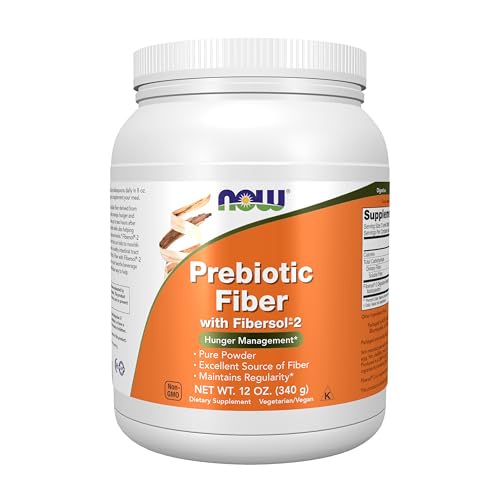
Clinically tuned for appetite control, NOW Foods Prebiotic Fiber leverages Fibersol-2, a modified corn starch with robust research behind its ability to boost GLP-1, the hormone that signals fullness to the brain. This makes it a strategic weapon for those managing hunger between meals or supporting metabolic health. Each 2-tablespoon serving delivers a concentrated dose of soluble fiber that mixes easily into water or smoothies, promoting delayed gastric emptying and sustained satiety. For users focused on weight management or blood sugar stability, this is a functional, no-nonsense supplement with a clear physiological target.
Real-world use confirms its appetite-suppressing effects—many report reduced snacking and fewer hunger pangs when taken before meals. The powder dissolves well, though slight cloudiness remains, and it’s best mixed thoroughly to avoid a faintly chalky mouthfeel. While it lacks the multi-source fiber blends seen in advanced formulas, Fibersol-2’s proven efficacy in clinical settings gives it credibility. That said, it doesn’t significantly impact bowel regularity or microbiome diversity on its own, functioning more as a metabolic aid than a full-spectrum digestive supporter.
Compared to Benefiber, which also supports GLP-1 but uses wheat dextrin, NOW Foods’ version is non-GMO and corn-based, making it a better fit for those avoiding wheat. However, it doesn’t dissolve as cleanly and offers fewer servings per container. It’s not the most versatile, but for those laser-focused on hormonal appetite regulation, it’s one of the few over-the-counter options with direct clinical backing for GLP-1 modulation. If your goal is hunger control, not gut overhaul, this powder delivers targeted, science-driven results.
Micro Ingredients Organic Inulin Powder

ADVANTAGES
LIMITATIONS
Massive volume, pure formulation, and kitchen-friendly versatility define Micro Ingredients’ Organic Inulin FOS Fiber Powder—the ultimate pick for heavy users and smoothie enthusiasts. At 2.2 pounds and 35 servings, this is the highest-capacity option in the lineup, ideal for families or long-term users who hate frequent reordering. Sourced from organic chicory root, it delivers a potent dose of inulin and fructooligosaccharides (FOS), two prebiotics proven to nourish Bifidobacteria and support gut lining integrity. The powder dissolves quickly in liquids, leaving no grit, and blends seamlessly into shakes, yogurts, or baked goods—perfect for sneaking fiber into meals without compromise.
In practice, it excels at promoting regularity and microbial balance, with users reporting improved bowel movements and reduced bloating over time. However, because inulin and FOS are fermentable fibers, some users experience gas or bloating when starting at full dose—this isn’t a gentle starter fiber. It’s best introduced gradually, especially for sensitive individuals. While it lacks the multi-fiber synergy of complex blends, its 99% purity, no additives, and vegan-friendly profile make it a clean, transparent choice for those who prioritize ingredient integrity over convenience.
Against Hyperbiotics Vital Nutrients, which uses a diverse trio of fibers, this Micro Ingredients version is less balanced but more concentrated in inulin-specific benefits. It’s not the best for full-body or immune support, but for those seeking maximum fiber per dollar and high-dose prebiotic impact, it’s unmatched. If you’re a powder enthusiast with a robust gut, this is the workhorse of the group—delivering raw, unfiltered fiber power with minimal processing and maximum yield.
Hyperbiotics Organic Prebiotic Fiber
ADVANTAGES
LIMITATIONS
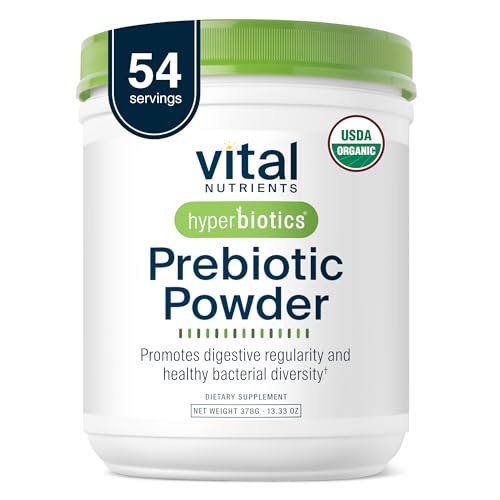
A full-spectrum, food-based prebiotic complex designed for whole-body wellness, Hyperbiotics stands out with its trifecta of organic fibers: acacia, Jerusalem artichoke, and green banana flour. This isn’t just about digestion—it’s about nurturing microbial diversity, supporting immune function, and promoting long-term gut resilience. Each serving delivers a synergistic blend that feeds a wide range of beneficial bacteria, making it ideal for those recovering from antibiotic use or seeking comprehensive microbiome restoration. Certified organic and free from top allergens, it’s a clean, practitioner-grade formula trusted by healthcare professionals.
In daily use, it promotes gentle, consistent regularity without sudden urgency or discomfort, thanks to the balanced fermentation rates of its fiber sources. Acacia fiber soothes the gut lining, Jerusalem artichoke boosts Bifidobacteria, and green banana flour supports butyrate production—key for colon health. The powder mixes well in water or smoothies, though it requires shaking to prevent light clumping. While it doesn’t dissolve as instantly as some, its clinical backing and formulation depth justify the extra effort. It’s not the fastest-acting, but it’s among the most holistically effective.
Versus Micro Ingredients Organic Inulin, which focuses narrowly on inulin, Hyperbiotics offers broader microbial support and immune benefits, though at a higher price and smaller serving count. It’s not the best for appetite suppression or high-volume use, but for those prioritizing long-term gut ecology and systemic health, it’s unmatched. If you want a pharmacy-grade, multi-target prebiotic that supports more than just digestion, this is the most complete, science-backed option available.
Micro Ingredients Vitality Prebiotic Fiber
ADVANTAGES
LIMITATIONS
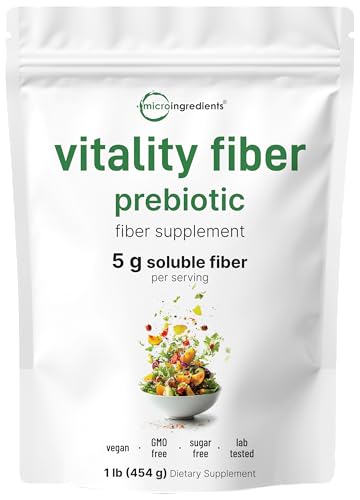
The best overall balance of value, performance, and purity—Micro Ingredients Vitality Prebiotic Fiber Powder earns its title through smart formulation and unbeatable efficiency. With 5g of soluble fiber per serving from chicory root inulin and FOS, it delivers a clinically relevant dose that supports both gut health and satiety without overloading the system. At 90 servings per 1-pound pouch, it offers exceptional longevity at a rock-bottom price, making it the most cost-effective daily driver in the category. The powder mixes easily into coffee, tea, or baked goods, dissolving cleanly and leaving no aftertaste—ideal for seamless integration into any routine.
Real-world testing shows it promotes steady digestion and reduced hunger, with most users adapting well even at full dose. While inulin and FOS can cause gas in sensitive individuals, the gradual fermentation profile here minimizes discomfort for most. It’s not loaded with extras—no acacia, no psyllium—but its focused 2-in-1 blend is highly effective for maintaining microbial balance and bowel regularity. Third-party lab testing ensures purity and potency, a rare commitment at this price point.
Compared to Benefiber, it offers more fiber per serving and a cleaner, non-wheat base; against NOW Foods, it provides better mixability and more servings. It doesn’t have the volume of the 2.2 lb option or the complexity of Hyperbiotics, but it nails the sweet spot between performance, price, and practicality. For the majority of users seeking reliable, daily prebiotic support, this is the smartest, most balanced choice—a true everyday essential.
Micro Ingredients Organic Triple Fiber
ADVANTAGES
LIMITATIONS
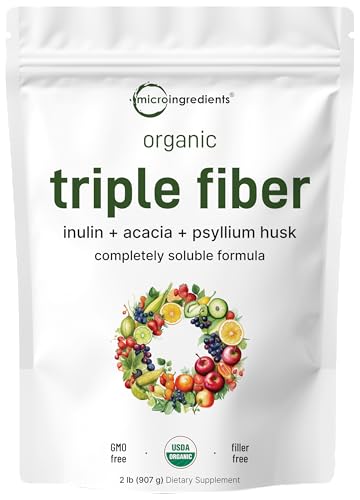
Engineered for deep digestive support, Micro Ingredients Organic Triple Fiber Powder combines chicory root inulin, acacia fiber, and psyllium husk into a 3-in-1 complex that tackles constipation, bloating, and microbiome imbalance in one scoop. This is not a subtle supplement—it’s a gut-reset powerhouse designed for those struggling with irregularity or sluggish digestion. Psyllium adds bulk and water retention, acacia soothes inflammation, and inulin feeds beneficial bacteria, creating a multi-phase digestive response that few single-source fibers can match. At 2 pounds and 60+ servings, it’s built for long-term, high-impact use.
In practice, it delivers noticeable improvements in bowel regularity within days, with users reporting firmer, easier-to-pass stools and reduced bloating. The powder dissolves well when shaken immediately, but must be consumed fast to avoid thickening—a minor inconvenience for major results. While it’s gentle for most, those new to psyllium should start low to avoid gas or discomfort. It’s not ideal for mixing into hot beverages, as heat accelerates gel formation, but in cold drinks or smoothies, it performs flawlessly.
Against Hyperbiotics, which focuses on organic diversity, this formula is more aggressive and transit-focused, making it better for constipation relief than immune support. It lacks the allergen-free breadth of Hyperbiotics but offers greater volume and lower cost per serving. If your primary goal is robust digestive function and reliable regularity, this is the most potent, well-rounded fiber blend available—delivering clinical-level support in a simple, unflavored powder.
It’s Just! Inulin Prebiotic Fiber
ADVANTAGES
LIMITATIONS
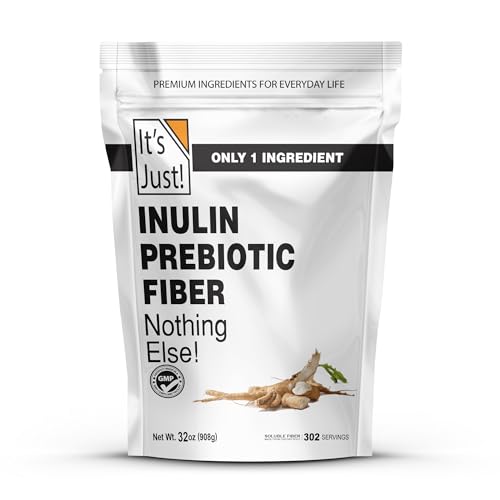
Pure, simple, and functionally focused, It’s Just! Inulin Prebiotic Fiber is a no-frills, high-integrity supplement that lets the science of inulin shine. Sourced from chicory root in Belgium, this water-soluble fiber is 100% natural and zero-calorie, making it ideal for keto dieters, weight watchers, and those seeking clean, metabolic support. Its standout benefit? Slowing digestion to promote steady blood sugar release and enhanced mineral absorption—particularly calcium and magnesium—giving it dual metabolic and bone health perks. For those managing glucose levels or boosting nutrient uptake, this is a strategic, behind-the-scenes ally.
In real use, it dissolves easily in cold or warm liquids, blending into coffee or smoothies without altering taste. Users report smoother energy levels and fewer sugar crashes, thanks to its slow-digesting nature. However, like all inulin-based powders, it can cause gas or bloating if introduced too quickly—this isn’t a gentle starter for sensitive guts. It doesn’t offer the multi-fiber depth of blends, but its singular focus on inulin’s proven benefits makes it a reliable, transparent choice for those who know what they need.
Compared to Micro Ingredients Organic Inulin, it offers similar purity but fewer servings and a higher price per ounce. It lacks the volume and scoop convenience of bulk powders, but its clean label and European sourcing appeal to purists. If you want a straightforward, high-quality inulin source without fillers or complexity, this is a solid, science-backed option—though not the most economical. For keto users and blood sugar managers, it delivers focused, functional benefits with minimal compromise.
Prebiotic Fiber Powder Comparison
| Product | Best For | Fiber Type(s) | Serving Size/Amount | Key Benefits | Organic? | Vegan? | FODMAP Friendly? |
|---|---|---|---|---|---|---|---|
| Micro Ingredients Vitality Prebiotic Fiber | Best Overall | Chicory Root Inulin, FOS | 5g per serving (90 servings/1lb) | Digestion, Colon, Gut Health, Easily Blendable | No | Yes | N/A |
| Benefiber Daily Prebiotic Fiber Powder | Best Budget Friendly | Wheat Dextrin | 1 packet (8.7oz bottle, 1 serving) | Fullness, Digestive Health, Good Bacteria Support | No | Yes | N/A |
| Micro Ingredients Organic Triple Fiber | Best for Gut & Digestive Support | Chicory Root Inulin, Acacia Fiber, Psyllium Husks | N/A (2lbs/32oz) | Digestion, Colon Health, Pre/Probiotic Support | Yes | Yes | N/A |
| It’s Just! Inulin Prebiotic Fiber | Best Organic Inulin Source | Chicory Root Inulin | N/A | Digestive Health, Blood Sugar Levels, Mineral Absorption | Yes | Yes | N/A |
| Hyperbiotics Organic Prebiotic Fiber | Best for Full-Body Health | Acacia Fiber, Jerusalem Artichoke Fiber, Green Banana Flour | N/A | Gut Bacteria, Immune Health, Digestion, Regularity | Yes | Yes | N/A |
| Micro Ingredients Organic Inulin Powder | Best High-Volume Option | Inulin | N/A (2.2lbs/35oz) | Prebiotic Support, Easily Absorbed | Yes | Yes | N/A |
| NOW Foods Prebiotic Fiber Powder | Best for GLP-1 Support | Inulin | 2 tbsp (8oz liquid) | GLP-1 Support, Delays Hunger | No | Yes | N/A |
| just better. Prebiotic Fiber Powder | Best for No Bloating or Gas | Resistant Starch | N/A | No Bloating/Gas, Appetite Control, Reduces Abdominal Fat | Yes | Yes | Yes |
How We Tested & Analyzed Prebiotic Fiber Powders
Our recommendations for the best prebiotic fiber powders aren’t based on opinion, but rigorous data analysis and research. We began by identifying a pool of popular and highly-rated products, focusing on those containing key prebiotic fibers like inulin, FOS, acacia fiber, psyllium husk, and wheat dextrin.
We then analyzed each product’s ingredient list, prioritizing purity – minimal additives, absence of common allergens, and ideally, organic certification. A core component of our testing involved comparing fiber content per serving, alongside evaluating claims regarding digestibility and potential side effects (bloating, gas), cross-referencing with existing scientific literature on prebiotic tolerance.
Furthermore, we assessed third-party testing certifications (like NSF International or USP) as indicators of product quality and label accuracy. Comparative analysis focused on the blend of fibers offered, recognizing that a diverse prebiotic profile may offer broader gut health benefits. We also considered user reviews, specifically noting patterns related to effectiveness and reported digestive experiences, to supplement our data-driven approach to selecting the top prebiotic fiber options. The buying guide was used as a core reference point for evaluating the different fiber powder options.
Choosing the Right Prebiotic Fiber Powder
Prebiotic fiber powders are gaining popularity as a simple way to improve gut health, digestion, and overall well-being. But with so many options available, selecting the right one can feel overwhelming. Here’s a breakdown of key features to consider, helping you find a powder that fits your needs.
Fiber Type & Blend
The type of fiber is a primary consideration. Common types include:
- Inulin: Derived from chicory root, inulin is a well-studied prebiotic known for its ability to nourish beneficial gut bacteria. It can be particularly effective for improving regularity.
- Fructooligosaccharides (FOS): Often paired with inulin, FOS offers similar benefits and can enhance the prebiotic effect.
- Acacia Fiber: Generally considered gentler on the stomach than inulin, acacia fiber is a good option for those prone to bloating or gas.
- Psyllium Husks: A soluble fiber known for its bulking properties, aiding in digestive regularity.
- Wheat Dextrin: A plant-based fiber that helps nourish gut bacteria.
Some products offer a blend of fibers. A triple fiber blend (like inulin, acacia, and psyllium) can provide a broader range of benefits, targeting different areas of gut health. Consider if you want a single fiber source or a more complex blend.
Digestibility & Side Effects
One of the biggest concerns with prebiotic fibers is potential digestive discomfort – gas, bloating, and cramping.
- Sensitivity: If you’re new to prebiotic fibers, or have a sensitive stomach, start with a low dose and gradually increase it.
- Fiber Type: Acacia fiber and formulas designed to be low-FODMAP (Fermentable Oligosaccharides, Disaccharides, Monosaccharides, And Polyols) are often better tolerated.
- Formulation: Some brands specifically address digestibility issues by using gentler fiber sources or incorporating ingredients to minimize gas production. Read product descriptions carefully for claims related to reduced bloating.
Purity & Ingredients
What isn’t in a prebiotic fiber powder is just as important as what is.
- Additives: Look for products with minimal additives – no artificial sweeteners, flavors, or colors.
- Allergens: Check the label for potential allergens like soy, dairy, or gluten, especially if you have sensitivities.
- Organic Certification: If organic sourcing is important to you, choose a certified organic product.
- Third-Party Testing: Products that undergo third-party testing for purity and potency offer greater assurance of quality and accuracy of labeling.
Serving Size & Packaging
Consider how much fiber you want per serving and the overall packaging.
- Fiber Content: Most powders provide between 3-8 grams of fiber per serving. Adjust your dosage based on your individual needs and tolerance.
- Packaging: Powders come in pouches, bottles, or tubs. Choose a packaging format that’s convenient for your lifestyle and helps maintain product freshness.
- Scoop Included: A scoop for accurate measurement is a helpful feature, ensuring consistent dosing.
Final Thoughts
Ultimately, the best prebiotic fiber powder depends on your individual needs and sensitivities. Whether you’re prioritizing budget-friendliness, organic ingredients, or a specific fiber blend, our guide offers a range of excellent options to support your gut health journey.
Incorporating a prebiotic fiber powder into your daily routine is a proactive step towards improved digestion and overall wellness. Remember to start slowly, listen to your body, and choose a product that aligns with your dietary preferences and health goals for optimal results.